LASIK Surgery in Amritsar –Nirmaljot Eye Hospital
Get freedom from glasses with LASIK eye surgery at Nirmaljot Eye Hospital, Amritsar. LASIK is a laser vision correction procedure that helps correct nearsightedness, farsightedness and astigmatism. Our eye specialists provide consultations and comprehensive eye examinations to determine whether LASIK is suitable for you. With proper evaluation and personalised care, we help you explore your vision correction options. Benefits of LASIK Surgery: Reduced dependence on glasses and contact lenses. Quick procedure and recovery for many patients. Improved vision for suitable candidates. Book Your LASIK Consultation Today! Contact Nirmaljot Eye Hospital to learn more about LASIK surgery and take the first step towards clearer vision.
Touch-Free LASIK with SmartSurf®️ Technology: Flapless Laser Eye Surgery
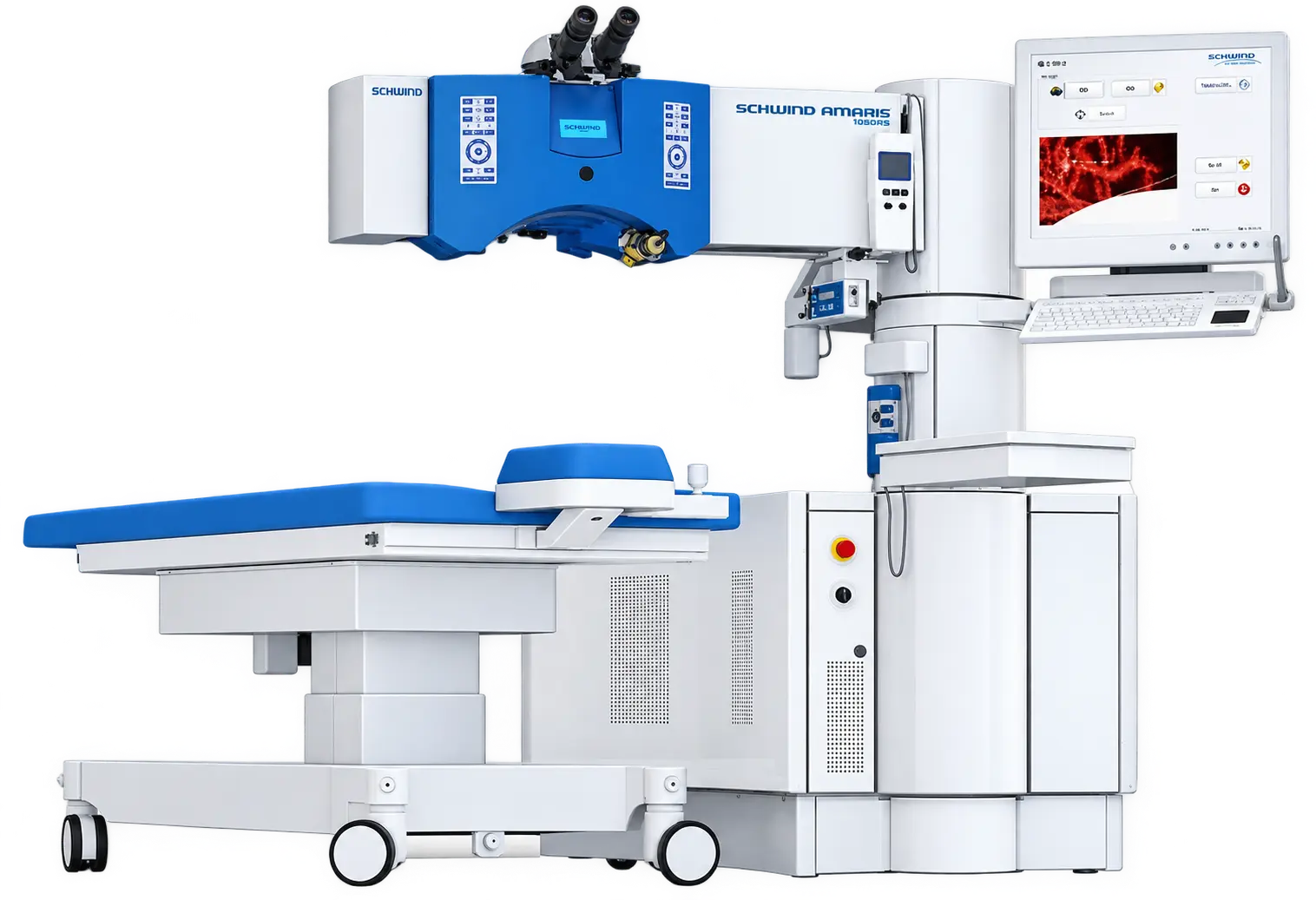
Touch-Free LASIK with SmartSurf®️ Technology is an advanced, flapless form of laser vision correction designed to reduce dependence on spectacles and contact lenses. This technology, available with the SCHWIND AMARIS 1050RS, uses a sophisticated laser-guided approach to reshape the cornea according to each patient’s individual eye measurements and visual requirements.
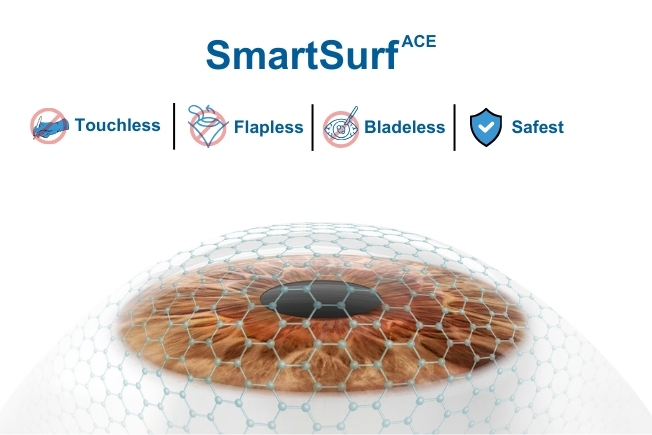
Unlike conventional LASIK, Touch-Free LASIK does not involve creating a corneal flap. There is no blade, no surgical cut and no flap. The procedure uses advanced surface ablation technology, commonly referred to as TransPRK, in which the corneal surface is treated using the excimer laser before the underlying corneal tissue is precisely reshaped to correct refractive errors such as myopia, hyperopia and astigmatism.
What Is Touch-Free LASIK?Touch-Free LASIK is a flapless laser eye surgery in which the corneal surface is treated directly with an excimer laser. Unlike conventional LASIK, there is no mechanical or laser-created corneal flap. This makes it an option for patients looking for a minimally invasive approach to laser vision correction.
How Does SmartSurf®️ Technology Work?SmartSurf®️ Technology uses advanced laser technology to perform surface ablation and precisely reshape the cornea. The treatment is customized according to the patient’s eye measurements and refractive error. Advanced eye-tracking technology helps the laser accurately follow the eye during treatment.
What Happens During Touch-Free LASIK?Before treatment, a comprehensive LASIK screening is performed to assess your spectacle power, corneal thickness, corneal shape, tear film and overall eye health.
On the day of surgery, numbing eye drops are used to keep you comfortable. You will be asked to focus on a target light while the laser performs the treatment. The procedure does not require a blade, surgical incision or corneal flap.
After treatment, a protective contact lens may be placed over the eye while the corneal surface heals.
Is Touch-Free LASIK Painful?The procedure itself is generally performed under topical anaesthesia, so patients should not experience significant pain during the laser treatment. Some patients may experience watering, light sensitivity, irritation or discomfort during the initial healing period, as the corneal surface recovers.
How Long Does It Take to Recover from Touch-Free LASIK?Because Touch-Free LASIK/TransPRK is a surface-based procedure, visual recovery is different from conventional flap-based LASIK. Vision generally improves progressively as the corneal surface heals and continues to stabilize over the following weeks.
Your ophthalmologist will prescribe medications and provide detailed post-operative instructions to support healing and visual recovery. Who Is a Good Candidate for Touch-Free LASIK?Not everyone is suitable for laser vision correction. Your suitability depends on several factors, including age, stability of spectacle power, corneal thickness and shape, refractive error, tear-film health and overall eye health.
A detailed pre-operative examination is essential before deciding whether Touch-Free LASIK is appropriate for you.
Touch-Free LASIK vs Conventional LASIK: What Is the Difference?The key difference is the treatment approach. Conventional LASIK involves creating a corneal flap before reshaping the underlying corneal tissue. Touch-Free LASIK is flapless and uses surface ablation technology to treat the cornea without creating a flap.
Your eye surgeon can recommend the most appropriate procedure based on your individual eye anatomy and visual requirements.
Is Touch-Free LASIK Available in Amritsar? Patients considering Touch-Free LASIK in Amritsar can undergo a detailed refractive evaluation at Nirmaljot Eye Hospital, Mall Road, Amritsar. The hospital offers advanced laser vision correction using the SCHWIND AMARIS 1050RS with SmartSurf®️ Technology. Why Choose SmartSurf®️ for Laser Vision Correction?SmartSurf®️ Technology combines flapless surface ablation, sophisticated eye tracking and customized laser treatment to provide a modern approach to refractive surgery. The goal is to precisely reshape the cornea according to each patient’s individual refractive requirements while avoiding the creation of a corneal flap.
Frequently Asked Questions About Touch-Free LASIK